
Introduction
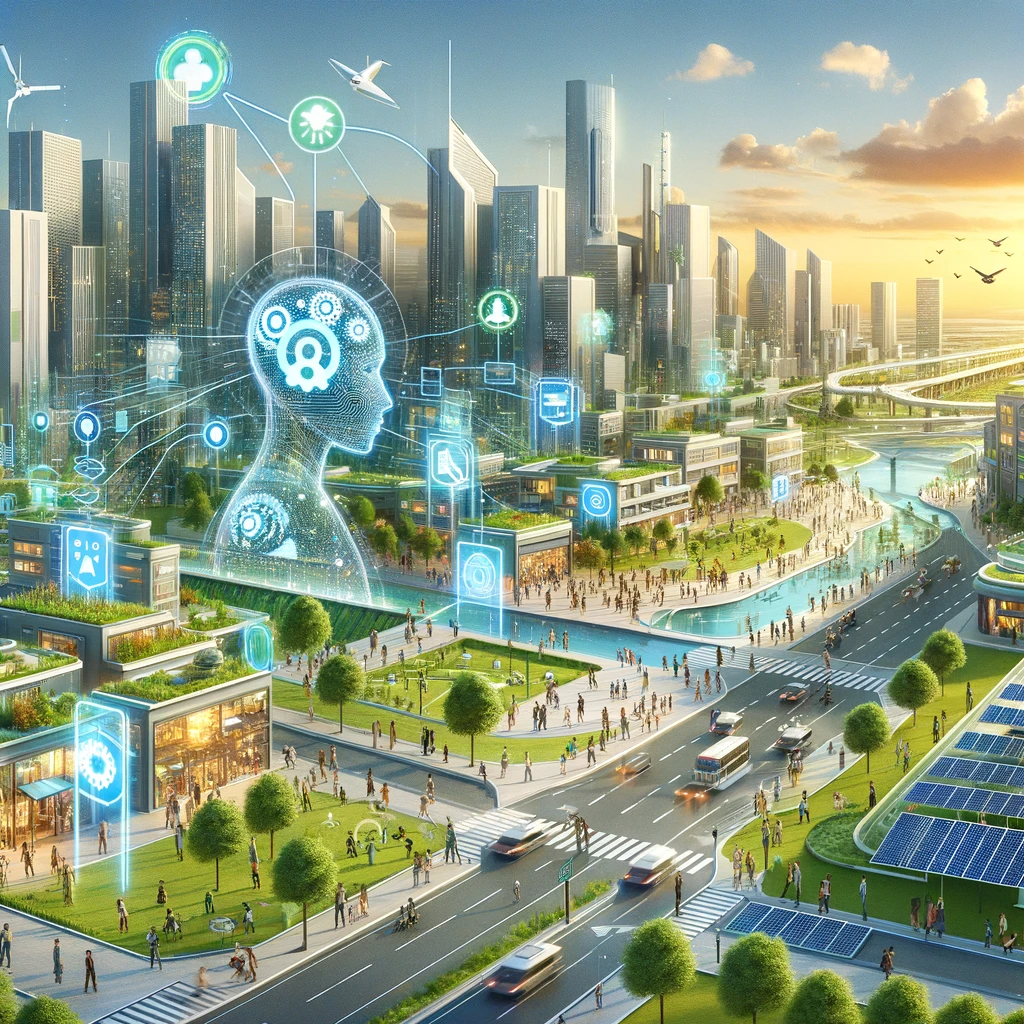
Imagine a world where your morning coffee is brewed to perfection, your daily tasks are expertly organized, and your health is monitored with the precision of a personal physician—all seamlessly integrated into your life. This isn’t a scene from a distant future; it’s the present, enhanced by Artificial Intelligence (AI). As our world rapidly embraces digital transformation, AI emerges as a pivotal force, reshaping the way we live, work, and interact.
I must confess, I was once a skeptic. The idea of machines making decisions and managing aspects of our lives seemed more like science fiction than reality. But then, I had my first encounter with AI, and it was a game-changer. It started with ChatGPT. While it’s not flawless and often requires some trial and error with prompts, it revolutionized the way I approach tasks. From simplifying complex information to offering creative solutions, ChatGPT demonstrated the practical and everyday benefits of AI.
As someone who has transitioned from doubt to advocacy, join me on this journey to demystify AI. We’ll explore its intricacies and reveal why it’s not just a technological advancement, but a pathway to a more interconnected and capable world. Through this exploration, told not in the complex jargon of tech experts but through relatable stories and personal experiences, we’ll discover how AI, despite its imperfections, is an invaluable ally in our daily lives. Let’s embark on this adventure together, uncovering how embracing AI is not just about understanding a tool, but about envisioning a future where our human potential is amplified like never before.
Demystifying AI
What exactly is Artificial Intelligence? To many, it conjures images of robots and science fiction scenarios. But AI is far simpler and more common than we often realize. At its core, AI is about creating machines or software that can think, learn, and adapt in a way that resembles human intelligence, but it’s not about replicating the human mind. It’s about building systems that can solve problems, make decisions, and even predict outcomes based on data.
Let’s bust some myths here. First, AI isn’t just about complex robots; it’s in the apps on your phone, the recommendations on your streaming service, and the voice assistant that sets your alarm. AI is embedded in our daily routines, often without us even noticing.
Second, AI doesn’t operate on its own. It requires human guidance and input. The idea that AI could one day surpass human intelligence and operate independently is a popular topic in movies and books, but it’s far from our current reality. AI systems are tools designed to enhance human capabilities, not replace them.
Remember my first experience with ChatGPT? It was a perfect example of AI in action. ChatGPT, like many AI systems, learns from interactions and data, but it doesn’t ‘think’ like a human. It processes information based on patterns and data it’s been trained on. This is why sometimes the responses can be surprising or off-mark—it’s not perfect, but it’s constantly learning and evolving with each interaction.
Understanding AI is not about grasping complex algorithms or coding; it’s about recognizing how it’s already a part of our lives, improving and simplifying daily tasks. It’s an exciting journey of discovery, one where we learn to coexist and collaborate with technology for a better, more efficient world.
Historical Perspective
The journey of Artificial Intelligence is as fascinating as it is transformative. It’s a story that begins not in the digital age, but in the realms of philosophy and early computing. The term “Artificial Intelligence” was first coined in 1956 by John McCarthy, but the concept dates back even further. Early philosophers pondered the idea of intelligent machines, setting the stage for a centuries-long quest to bring these ideas to life.
In the 1940s and 1950s, the groundwork for AI was laid by pioneering computer scientists who asked a radical question: could machines think? This period saw the creation of the first programmable digital computers, which led to the initial AI programs in the 1950s and 1960s. These programs could solve algebra problems, prove logical theorems, and even mimic the language skills of a four-year-old.
However, AI’s journey hasn’t been without its ups and downs. The initial excitement gave way to periods known as “AI winters,” where progress slowed due to limited technology and skepticism. But the dream never died. The 1990s and 2000s witnessed a resurgence, thanks to advances in machine learning and the internet. Computers could now store more data and learn from it, leading to breakthroughs like IBM’s Deep Blue defeating a world chess champion in 1997.
Fast forward to today, AI is an integral part of our lives. The evolution from simple problem-solving programs to systems that can recognize faces, understand speech, and even drive cars is nothing short of extraordinary. This journey mirrors human ingenuity and persistence, a testament to our relentless pursuit of knowledge and improvement.
In reflecting on AI’s history, we gain not only a sense of its capabilities but also an appreciation for the human curiosity and intellect that has driven its development. As we look to the future, this history serves as both a foundation and a springboard for the endless possibilities that AI holds.
AI in Our Daily Lives
It’s easy to overlook how intertwined Artificial Intelligence has become with our everyday routines. Yet, AI’s subtle integration into our lives has made many tasks simpler and more efficient. Let’s take a closer look at the ways AI touches our daily experiences, often without us even realizing it.
Think about the last time you used a navigation app to find the quickest route to a new destination. AI algorithms analyzed real-time traffic data to guide you there. Or consider how online shopping platforms seem to know exactly what you’re looking for, suggesting products tailored to your preferences. That’s AI working behind the scenes, learning from your browsing and purchasing history to enhance your shopping experience.
AI also plays a significant role in our online interactions. Social media platforms use AI to personalize your feed, showing you content that aligns with your interests and interactions. Even the spam filters in your email are AI-driven, keeping unwanted messages at bay.
In the realm of entertainment, streaming services employ AI to recommend movies and music based on your previous selections. This personalization has revolutionized the way we discover and enjoy media, making it more tailored to our individual tastes than ever before.
But AI’s influence extends beyond convenience and entertainment. It’s also a powerful tool in critical areas like healthcare. AI-driven tools assist doctors in diagnosing diseases more accurately and quickly by analyzing medical images. In some cases, AI algorithms can identify patterns in data that are difficult for human eyes to catch.
AI’s presence in our daily lives demonstrates its versatility and adaptability. From simplifying mundane tasks to assisting in life-saving medical diagnoses, AI is not just a futuristic concept—it’s a present reality, enhancing our lives in myriad ways. As we become more accustomed to these AI-driven conveniences, it’s exciting to think about how they will continue to evolve and improve our daily experiences in the future.
Benefits of AI
The advantages of Artificial Intelligence are as diverse as they are significant, touching nearly every aspect of our lives and industries. Here, we’ll explore some key benefits of AI, showcasing how it’s not just a technological marvel, but a catalyst for efficiency, innovation, and progress.
1. Efficiency and Automation: At the heart of AI’s benefits is its ability to automate routine tasks, from scheduling meetings to sorting data. This automation goes beyond mere time-saving; it allows humans to focus on more complex and creative tasks. In manufacturing, AI-driven robots handle repetitive tasks, increasing production rates and reducing errors.
2. Enhanced Data Analysis: In today’s data-driven world, AI excels at processing and analyzing vast amounts of information rapidly. Businesses use AI to glean insights from customer data, helping them make informed decisions and tailor services. In finance, AI algorithms analyze market trends to predict stock movements, assisting with investment strategies.
3. Personalization: AI’s ability to learn from user data enables a level of personalization previously unattainable. From personalized learning plans in education to customized treatment in healthcare, AI tailors experiences and solutions to individual needs, enhancing outcomes and satisfaction.
4. Healthcare Innovations: Perhaps one of the most profound impacts of AI is in healthcare. AI algorithms assist in early disease detection, drug discovery, and personalized medicine. By analyzing medical records and imaging, AI aids in diagnosing illnesses more accurately and quickly, offering hope for better patient outcomes.
5. Environmental and Conservation Efforts: AI also plays a crucial role in environmental protection. By analyzing climate data, AI helps in predicting and mitigating natural disasters. In wildlife conservation, AI-driven drones and tracking systems monitor endangered species and combat poaching.
6. Accessibility and Inclusivity: AI technologies like voice recognition and language translation tools break down communication barriers, making information and services more accessible to people with disabilities or those speaking different languages.
The benefits of AI are not just about what it can do, but about what it enables us to do. By handling time-consuming tasks, providing deep insights, and offering personalized experiences, AI frees us to focus on creativity, strategic thinking, and innovation. As AI continues to evolve, its potential to transform industries and improve lives seems almost limitless.
Addressing AI Skepticism
Despite the myriad benefits of AI, it’s natural to have reservations and concerns. From job displacement to ethical considerations, these issues merit a thoughtful discussion. Here, we’ll address some common AI skepticism, providing a nuanced perspective on these important topics.
1. Job Displacement: A major concern is that AI and automation could lead to significant job losses. While AI does automate some tasks, history shows that technology often creates more jobs than it displaces. AI can eliminate tedious tasks, allowing workers to focus on more meaningful and creative work. Moreover, the AI industry itself is a growing source of employment, from development to maintenance and oversight.
2. Privacy and Security: As AI systems process vast amounts of data, concerns about privacy and data security arise. It’s crucial that AI development goes hand-in-hand with robust data protection policies and ethical standards. Transparency in how AI systems use data and ongoing efforts to strengthen data security are key to building trust.
3. Ethical and Bias Concerns: AI systems are only as unbiased as the data they’re trained on. There is a growing awareness of the need for diverse, unbiased data and the development of ethical AI frameworks. Organizations and researchers are actively working to address these challenges, ensuring AI systems are fair and ethical.
4. Dependence on Technology: There’s a worry that heavy reliance on AI could lead to a loss of certain skills or over-dependence on technology. While AI does make many tasks easier, it’s important to maintain a balance and ensure that AI augments rather than replaces human skills and judgment.
5. Misunderstanding AI’s Capabilities: Often, skepticism stems from misconceptions about what AI can and cannot do. AI is not an all-knowing entity; it’s a tool with limitations and specific applications. Understanding these limitations helps in setting realistic expectations and finding the most beneficial applications of AI.
In addressing these concerns, it becomes clear that the key to a harmonious relationship with AI lies in responsible development, ethical usage, and ongoing education. By being aware of and addressing these challenges, we can steer AI development in a direction that maximizes its benefits while minimizing potential drawbacks.
The Future of AI
As we stand at the crossroads of technological advancement, pondering the future of Artificial Intelligence is both exhilarating and crucial. The possibilities are vast, and the potential for transformative change is immense. Here, we’ll explore some of the predictions and upcoming trends in AI, painting a picture of what the future may hold.
1. Advancements in Learning Algorithms: Future AI systems are expected to learn and adapt much more efficiently, thanks to advancements in machine learning algorithms. This means AI will become even better at understanding complex patterns, making more accurate predictions, and providing more personalized experiences.
2. AI and the Internet of Things (IoT): The integration of AI with IoT promises a more connected and smart environment. Imagine homes, cars, and appliances all communicating seamlessly with each other, optimizing energy use, and enhancing daily life in unprecedented ways.
3. Ethical AI and Policy Development: As AI becomes more integrated into critical sectors, the development of ethical guidelines and policies will gain momentum. This includes addressing bias, ensuring transparency, and protecting privacy, ensuring AI’s growth is responsible and beneficial for all.
4. AI in Healthcare and Biotechnology: We’re likely to see groundbreaking applications of AI in healthcare and biotechnology. From personalized medicine based on individual genetics to AI-driven research in curing diseases, the potential for AI to revolutionize healthcare is enormous.
5. AI in Education: Personalized learning experiences tailored to individual students’ needs and learning styles could become the norm, with AI systems providing real-time feedback and customized educational materials.
6. Enhanced Human-AI Collaboration: The future will likely see a shift from AI as a tool to AI as a collaborator. Enhanced collaboration between humans and AI can lead to innovations in science, art, and industry, with AI contributing to creative processes and decision-making.
7. AI for Environmental Sustainability: AI will play a significant role in addressing climate change and environmental challenges. From optimizing resource use to monitoring environmental changes and aiding in conservation efforts, AI could be pivotal in our quest for sustainability.
As we look towards the future, it’s clear that AI is not just a fleeting trend but a fundamental shift in how we interact with technology and the world around us. The journey ahead is filled with potential and promise, beckoning us to approach it with optimism and a readiness to adapt. The future of AI is not just about technological leaps; it’s about shaping a world where technology enhances human potential and helps us address some of our most pressing challenges.
AI for Everyone
In the midst of rapid AI advancement, it’s crucial to ensure that these technologies are accessible and beneficial to everyone, not just a select few. This section emphasizes the need for inclusivity in the AI revolution, highlighting initiatives and practices that make AI more approachable and useful for people from all walks of life.
1. Democratizing AI Education: To truly harness the power of AI, education and knowledge-sharing are key. Efforts are being made to democratize AI education, offering resources and training to diverse populations. Online courses, workshops, and open-source learning materials are making AI knowledge more accessible than ever.
2. Inclusive AI Development: Developing AI systems with inclusivity in mind means considering diverse perspectives and needs. This includes designing AI applications that are user-friendly and adaptable to different languages, cultures, and abilities. By involving diverse groups in AI development, we can create more equitable and effective solutions.
3. Bridging the Digital Divide: The benefits of AI must reach all corners of society, including underrepresented and underserved communities. Initiatives to bridge the digital divide, such as providing affordable internet access and digital literacy programs, are crucial in ensuring equitable access to AI technologies.
4. Ethical AI for Social Good: AI has the potential to address social challenges and contribute to the greater good. Projects focusing on humanitarian aid, healthcare access, and environmental conservation are examples of how AI can be leveraged for positive social impact.
5. Encouraging Public Dialogue: Public understanding and engagement are essential in shaping the future of AI. Encouraging dialogue between technologists, policymakers, and the public can foster a more informed and collaborative approach to AI development and implementation.
By making AI for everyone, we not only enhance its potential impact but also ensure that its benefits are shared broadly and equitably. In doing so, we pave the way for a future where AI is a tool for empowerment, progress, and collective well-being.
Conclusion
As we conclude this exploration into the world of Artificial Intelligence, it’s clear that AI is not just a technological marvel but a transformative force reshaping our world. From its humble beginnings in the realm of science fiction to its current status as a daily assistant in our lives, AI has traversed an incredible journey. But this journey is far from over; it’s just the beginning of an era where technology and humanity converge in extraordinary ways.
Throughout this article, we’ve demystified AI, tracing its historical roots, witnessing its impact in our daily lives, and exploring the myriad benefits it brings across various sectors. We’ve addressed common concerns and looked ahead to a future brimming with potential. Most importantly, we’ve underscored the necessity of making AI accessible and beneficial to everyone, ensuring that this revolutionary technology serves as a catalyst for positive change across all strata of society.
As AI continues to evolve, it invites us to reimagine our potential, to rethink our limitations, and to embrace a future where technology amplifies our human capabilities. The story of AI is not just about algorithms and machines; it’s about people, communities, and the collective pursuit of a better, more efficient, and more inclusive world.
In embracing AI, we are not just adopting new technology; we are opening doors to new possibilities, new challenges, and new ways to address some of the most pressing issues of our time. The future of AI is a canvas of limitless potential, and it’s up to us to paint it with innovation, ethics, and a commitment to the betterment of humanity.